Jewelry often carries a meaning that goes beyond its appearance. An engagement ring can represent a promise, while a pair of diamond earrings may become a treasured family gift. As consumer preferences change, the jewelry industry is finding new ways to combine traditional beauty with modern technology.
Novita Diamonds is part of this shift. Founded in Australia, the company built its identity around laboratory-created diamonds and contemporary jewelry designs. Its story reflects a growing interest in alternative diamond production, personal customization, and more accessible luxury.
Table of Contents
The Beginning of the Novita Diamonds Story
The Novita lab diamonds story began with a personal search for an engagement ring. Founder Iris Arnold wanted a beautiful diamond but had concerns about the environmental and ethical questions associated with traditional diamond mining.
While researching alternatives, she recognized the potential of laboratory-grown stones. Rather than treating them as a temporary trend, she saw an opportunity to create a jewelry business centered on this emerging technology.
Arnold established Novita Diamonds in Australia in 2019. The brand’s name comes from the Latin word meaning “new,” reflecting its connection to a different approach to diamond jewelry.
The original idea was straightforward: give customers access to beautifully designed diamond pieces without making traditional mining the only option. That vision helped shape the company’s focus on engagement rings, wedding jewelry, and custom designs.
Why Laboratory-Created Diamonds Changed Jewelry
For generations, natural diamonds dominated the engagement and fine jewelry markets. Their rarity, geological history, and traditional associations made them popular choices for important occasions.
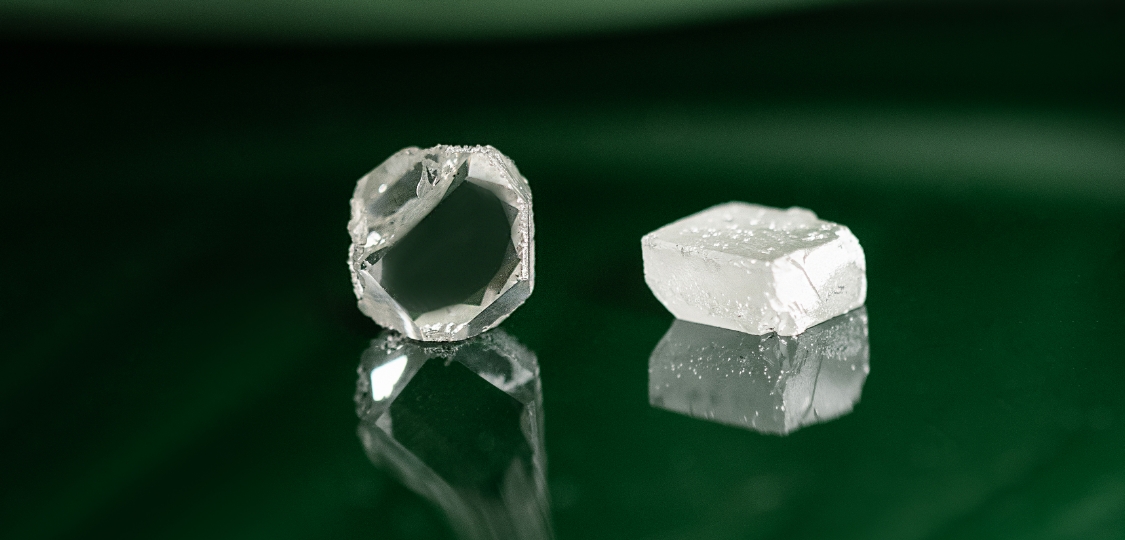
Laboratory technology introduced another way to produce genuine diamonds. These stones are created in controlled environments instead of forming naturally beneath the Earth’s surface over millions of years.
According to the International Gemological Institute (IGI), laboratory-grown diamonds have the same fundamental chemical composition and optical properties as natural diamonds. They are not the same as imitations such as cubic zirconia or moissanite.
Two main technologies are used in their production:
High Pressure, High Temperature (HPHT)
The HPHT method recreates conditions associated with natural diamond formation. Manufacturers use high temperatures and intense pressure to encourage carbon to crystallize around a diamond seed.
Chemical Vapor Deposition (CVD)
CVD uses a specialized vacuum chamber containing carbon-rich gases. Energy turns these gases into plasma, allowing carbon atoms to gradually build onto a diamond seed.
Both processes produce genuine diamonds. After growth, the stones undergo cutting, polishing, and quality assessment before being used in jewelry.
What Makes Novita’s Jewelry Approach Different?
Novita’s business model focuses on combining diamond selection with personalized jewelry design. Instead of limiting customers to a small collection of ready-made pieces, the company also offers custom-designed rings.
This approach is particularly relevant to engagement jewelry. Couples may have different preferences regarding stone shape, setting style, band width, and precious metal.
For example, someone who prefers a traditional appearance might choose a round brilliant center stone in a solitaire setting. Another customer may prefer an oval diamond surrounded smaller stones in a detailed halo design.
Novita also uses 3D computer-aided design technology to help customers visualize custom pieces before production. This gives buyers an opportunity to review the design and consider its proportions before the jewelry is made.
Its collections include engagement rings, wedding bands, and other fine jewelry. The company also offers appointment-based showroom experiences alongside its online shopping options.
Choosing Quality Beyond Appearance
A diamond’s appearance is only one part of its overall quality. Buyers should understand the characteristics that influence its brilliance, visual appeal, and documented grading.
The traditional 4Cs provide a useful starting point.
- Cut: Determines how effectively the diamond reflects and returns light. A well-cut stone can appear brighter and more lively.
- Color: Measures how much color is visible in a diamond. Colorless grades generally receive higher classifications.
- Clarity: Describes internal inclusions and external blemishes that may affect the stone’s appearance.
- Carat: Measures the diamond’s weight rather than its physical dimensions.
Independent grading reports from recognized laboratories such as IGI provide additional information about individual stones. Buyers can use these reports to compare diamonds rather than relying entirely on product photographs or retailer descriptions.
It is also worth checking the report number and confirming that the documentation matches the actual stone being purchased.
Sustainability and Responsible Purchasing
Environmental responsibility is one of the reasons consumers consider laboratory-grown stones. Their production avoids the need to extract diamond-bearing rock through conventional mining.
However, describing every laboratory-grown diamond as environmentally friendly would be misleading. Production requires substantial energy, and the environmental impact depends partly on the electricity source, manufacturing process, and operational practices.
The IGI specifically highlights that some producers use renewable energy while others depend on fossil-fuel-powered electricity.
Customers interested in sustainability should therefore look beyond general marketing statements. Ask about manufacturing locations, energy sources, third-party environmental certifications, and available sourcing documentation.
This makes purchasing decisions more informed and helps distinguish measurable commitments from broad promotional claims.
The Future of Personalized Diamond Jewelry
Personalization is becoming an important part of modern jewelry shopping. Buyers increasingly want pieces that reflect individual preferences instead of choosing only from traditional designs.
Custom settings, different diamond shapes, mixed metal finishes, and distinctive band details offer more creative possibilities. Digital design tools also make it easier to communicate ideas between customers and jewelry specialists.
Novita’s development reflects this changing market. Its focus on laboratory-created stones and custom jewelry connects technological progress with traditional occasions such as engagements, weddings, and anniversaries.
The brand’s growth also illustrates how consumers are becoming more familiar with different diamond origins. As awareness increases, clear product information and independent grading become increasingly valuable.
A New Chapter in Fine Jewelry
The Novita lab diamonds story is closely connected to a personal motivation: making diamond jewelry more accessible while offering an alternative to traditional mining. From its Australian beginnings in 2019, the company has developed a business focused on engagement rings, wedding bands, and customized designs.
For modern jewelry buyers, lab diamonds provide another genuine diamond option. The most meaningful purchase still comes down to selecting a well-documented stone, understanding its quality, and choosing a design that suits the person who will wear it.
A beautiful piece of jewelry does not need to follow every traditional rule. Its lasting appeal comes from the thought behind its selection, the quality of its craftsmanship, and the memories attached to it.